FamilyEducation Editorial Staff

Teen anxiety can appear as irritability, avoidance, perfectionism, sleep problems or physical symptoms rather than obvious fear. This guide helps parents recognise the signs, respond without minimising their teen’s feelings, set healthier digital boundaries, use simple grounding techniques and understand when anxiety may require professional support.
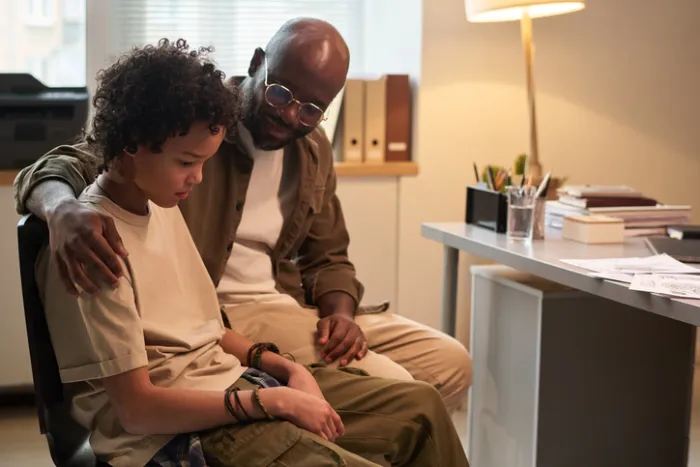
If you’ve recently tried to strike up a casual conversation with your teenager, only to be met with a lightning-fast defensive snap, an eye roll that could power a small city, or a sudden retreat to their bedroom cave, welcome to the club. Pull up a chair and take a deep breath.
It’s incredibly easy to write this kind of behavior off as classic teenage angst or a bad mood, but beneath that prickly, unapproachable exterior, a lot of our kids are secretly drowning in worry. Navigating the high-stakes academic pressure of high school, the brutal daily court of social media public opinion, and a world that feels a bit chaotic right now has made anxiety the ultimate uninvited guest in modern households.
As a parent, watching your bright, capable kid struggle is heartbreaking. You want to fix it, but every time you try, it feels like you're stepping on an emotional landmine. The good news? You don't need a degree in psychology to help them navigate this. You just need to understand what they are actually going through and learn a few real-world strategies to help them find their calm.
When we think of anxiety, we usually picture a nervous child trembling before a big speech or a panic attack straight out of a movie scene. But teen anxiety is a master of disguise, and it loves to masquerade as bad behavior, laziness, or attitude problems. If your kid is struggling, it will likely show up in ways that make you want to ground them rather than comfort them.
When the teenage brain goes into fight-or-flight mode, it often chooses to fight. If your usually sweet, cooperative kid has suddenly become hyper-critical, snappy, or easily irritated by the smallest things, their nervous system might just be completely overwhelmed. They aren't trying to make your life miserable; they just don’t have the emotional bandwidth left to filter their frustration.
If your teen is suddenly begging to stay home from school with vague ailments, dropping out of a favorite extracurricular activity, or putting off a major project until 11:00 PM the night before it’s due, it's rarely pure laziness. Procrastination is actually a desperate emotional coping mechanism. They are putting off the task because the thought of failing at it makes them feel physically sick.
Teenagers carry stress in their physical bodies in massive ways. Chronic headaches, random morning nausea, intense jaw-clenching, and the sudden inability to fall asleep before 2:00 AM are classic physical signs of a brain that refuses to turn off.
On the flip side, you might have an overachieving perfectionist. If your teen is obsessing over a single B+, rewriting an essay four times, or melting down over a minor mistake, they aren’t "highly motivated" - they are terrified that their worth as a person is tied directly to their report card.
We cannot talk about teen anxiety without addressing the glowing rectangle permanently attached to their hands. Social media doesn't just cause basic "FOMO" anymore; it creates a relentless, 24/7 comparison trap that no previous generation ever had to survive.
Your teen isn't just comparing their appearance, clothes, and social status to the kids in their homeroom; they are comparing their messy, behind-the-scenes real life to the curated, filtered, peak-highlight reels of millions of people worldwide. They are constantly bombarded with images of parties they weren't invited to, friendships that seem perfect, and standards of beauty that are literally impossible to achieve without an app. On top of that, their feeds push a non-stop stream of stressful global news, making them feel like the world is an unsafe place before they even step out the front door.
To support them, don’t try to ban the phone entirely unless you want a full-scale rebellion that shuts down communication. Instead, focus on creating natural "digital boundaries" that the whole house follows. Implement a rule where all phones sleep in the kitchen after 9:00 PM so their brains actually have a chance to produce melatonin and wind down.
Encourage a collective family digital detox for a few hours on the weekend. Go do something entirely offline together, whether that's cooking a ridiculous recipe, hitting a hiking trail, or playing a board game. Showing them that life is vibrant and fun away from the screen is much more powerful than lecturing them about screen time.
When our kids are upset, our baseline setting as parents is to fix the problem, use logic, or minimize the issue to make them feel better. We mean well! We love them and want them to see the bright side. But when an anxious brain is firing, logic goes completely out the window, and our reassuring phrases can accidentally make them feel isolated and misunderstood.
When we say things like, "It’s just a high school dance, it won’t matter in five years!" We think we are offering a helpful perspective. What the teen actually hears is: "My parents think my life and my feelings are silly and trivial." It causes them to stop sharing their worries with you because they don't want to feel judged.
Another classic trap is telling them, "You’re going to do great on that test, stop worrying!" While this sounds encouraging, it actually piles on a double layer of pressure. Now, your teen feels like they have to perform perfectly, and they feel guilty for being nervous in the first place, assuming something must be wrong with them because they can't just "switch off" the fear.
Lastly, we have to avoid the temptation to completely bail them out by saying, "Fine, you don’t have to go to the party if you're nervous." Watching your kid stress is heartbreaking, but letting them skip out completely allows the anxiety to win. It reinforces the dangerous idea in their brain that the world is indeed too scary for them to handle.
Instead, try shifting your language to something collaborative: "I know you're incredibly nervous about going tonight. Let’s drive there together, and if you still want to leave after twenty minutes, I promise I will pick you up, no questions asked." This gives them a safety net while still pushing them to take a brave micro-step forward.
You can’t control the school curriculum, the social media algorithms, or the chaos of the outside world, but you can control the vibe in your own living room. You have the power to create a safe harbor where their nervous system can finally rest.
Step 1: Validate First, Strategize Later
The first and most important step is to validate their feelings first and to strategize later. Before you offer a single piece of advice, just listen. Say something simple like, "Man, that sounds incredibly heavy. I am so sorry you have to carry that stress today." Sometimes, just knowing that they aren't crazy, broken, or alone is enough to lower their heart rate. Let them sit with their feelings without trying to sweep them under the rug.
Step 2: Use the "5-4-3-2-1" Grounding Trick
Second, teach them a physical grounding trick for when a panic spiral hits. When anxiety takes over, the emotional center of the brain completely hijacks the logical center. You have to calm the body before you can talk to the mind. Introduce the "5-4-3-2-1" method. Have them name five things they can see in the room, four things they can physically touch, three things they can hear, two things they can smell, and one thing they can taste. It sounds simple, but it forces their brain to disconnect from a scary, hypothetical future and anchors them right back to the safety of the present moment.
Step 3: Check Your Own Emotional Thermostat
Finally, check your own emotional thermostat. Anxiety is highly contagious. If your teen comes home melting down or snapping, and you match their chaotic energy with your own anger, frustration, or panic, the entire house blows up. Be the thermostat, not the thermometer. When they get loud, you get quiet. Lower your voice, slow down your breathing, and soften your posture. Your calm presence will act as a natural reset button for their fried nervous system.
A certain amount of worry, insecurity, and stress is a completely normal part of growing up and navigating the awkward transition into adulthood. However, as parents, we need to know when the situation has crossed the line from normal adolescent stress into something that requires outside help.
It is time to consider reaching out to a professional - whether that’s a school counselor, your family pediatrician, or a licensed adolescent therapist - if you notice the anxiety is systematically shrinking their world. Keep a close eye on whether their worries are keeping them from sleeping or eating for more than a few days in a row. Take note if they are completely withdrawing from their favorite friend groups, refusing to leave their room for weeks at a time, or if their grades take a massive, sudden n dive because they can no longer focus.
Most importantly, if they ever mention feeling entirely hopeless or hint at self-harm, treat it with immediate, loving seriousness. Finding them a great counselor isn't a parenting failure; it’s giving your child the best coach possible for their mental health.
At the end of the day, helping a teenager survive and thrive through anxiety isn't about clearing every single obstacle out of their path - that’s an impossible task. It’s about teaching them that they are resilient enough, strong enough, and supported enough to walk right through those obstacles.
By transforming your home into a judgment-free zone where fears can be talked about openly, you aren't just helping them get through this semester. You are equipping them with life-long emotional intelligence, problem-solving skills, and resilience that will serve them long after they pack up and head out into the world. Cut yourself some slack, keep showing up, and take it one day at a time. You are exactly the parent your teen needs right now.

Your Partner in Parenting, From Baby Name Inspiration to College Planning.
Subscribe