PlayKids

Unstructured play gives children the freedom to choose what they do, follow their ideas, and figure things out for themselves. Learn how independent play can support creativity, confidence, problem-solving, and comfort with boredom, plus simple ways to encourage it at home.
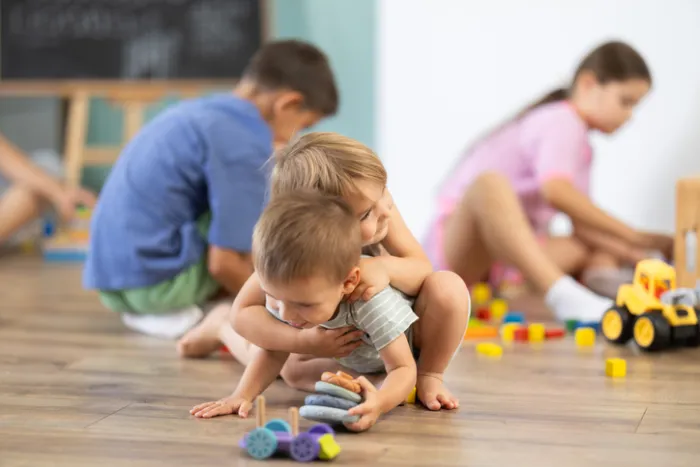
Between school, homework, sports, activities, and screen time, childhood can sometimes feel surprisingly scheduled. Even play can start to feel like something parents need to organize, supervise, or make “productive.” But children also need time when no one is telling them what to do next.
Unstructured play gives kids the freedom to choose what to play, how to play, and when to change direction. Whether they are building a fort out of blankets, making up a story with stuffed animals, drawing without a specific goal, or simply figuring out what to do when they are bored, this kind of play gives children valuable space to explore on their own.
And yes, that can include playing independently.
Unstructured play is play that is child-led rather than directed by an adult. It does not have a specific learning objective, set of rules, or expected outcome. Unlike a soccer practice or a guided craft activity, unstructured play lets children decide what happens next.
A box can become a spaceship. Blocks can become a city. A blanket can become a superhero cape. There is no “right” way to play. This is sometimes called free play, child-led play, or self-directed play. While these terms can have slightly different meanings, they all give children more control over their own play.
The American Academy of Pediatrics recognizes child-driven play as an important part of healthy development, supporting skills such as creativity, problem-solving, decision-making, and self-regulation.
Yes. Independent play can help children build confidence, creativity, problem-solving skills, and a sense of autonomy. That does not mean children should spend all their playtime alone or that parents should never join them. Children benefit from playing with parents, siblings, and friends, too. The goal is balance.
When children have opportunities to play independently, they get to practice making their own choices instead of constantly waiting for an adult to provide the next activity. Let’s take a look at the benefits of independent play for kids:
When a child decides what to play and figures out how to make it work, they are practicing independence in a very natural way. Maybe they cannot figure out how to build the tower they imagined. Maybe their pretend game needs a new character. Maybe they have run out of ideas. These small challenges give children opportunities to experiment, make decisions, and try again.
Over time, those experiences can help children develop confidence in their ability to solve problems and navigate challenges. Research on child-driven play links it with developing agency, decision-making, and resilience.
When an adult gives a child instructions, there is usually a specific way to complete the activity. Unstructured play removes that pressure. A child can draw a purple sun, turn a cardboard box into a rocket, or invent a completely new game. There is no correct answer.
That freedom encourages children to use their imagination and discover their own interests rather than simply following directions.
“I’m bored.” For many parents, those two words immediately trigger a search for something to do. But boredom isn't necessarily something that needs to be fixed.
When children are given time without a ready-made activity, they have the opportunity to come up with their own ideas. That might mean turning to a favorite toy, starting a pretend game, drawing, building something, or simply observing what is around them.
In other words, boredom can become the starting point for play rather than the end of it.
Children spend much of their day being told what comes next: get dressed, eat breakfast, go to school, do homework, take a bath, go to bed. Unstructured play gives some of that control back.
They can decide what interests them, how long they want to explore an idea, and when they are ready to move on. That sense of agency is one reason child-led play is valuable for children's development.
Independent play is not the same as leaving a child completely unsupervised. Parents can create a safe environment, stay nearby when appropriate, and check in while still allowing their child to take the lead. You also don't have to disappear when your child starts playing. Sometimes the best thing you can do is simply observe.
If your child is building a tower, resist the urge to show them how you would build it. If they are pretending that a toy is something completely different, let the story unfold. It’s important letting children take the lead rather than taking over their play, because too much adult direction can limit children's autonomy and creativity.
Independent play doesn't always happen automatically, especially if a child is used to having an adult organize their activities. Start small with these actions:
Keep a few age-appropriate toys and materials where your child can reach them and make their own choices. Blocks, dolls, stuffed animals, art supplies, books, puzzles, and simple household materials can all inspire open-ended play.
You don't need to announce, “Now you are going to play independently for 30 minutes.” Instead, start with a short period of unstructured time and let your child decide what to do. As they become more comfortable, they may naturally spend longer periods engaged in their own activities.
If your child says, “I don't know how to do this,” pause before jumping in. Try asking: “What do you think we could try?”. A small amount of frustration can give children an opportunity to practice persistence and problem-solving.
If your child turns a kitchen set into a spaceship, don't correct them. That's the point.
Unstructured play works best when children have room to decide what their play means.
Independent play isn't always quiet, neat, or obviously educational. A living-room fort may look like a mess, a pretend restaurant may require every stuffed animal in the house, a drawing session may end with paper everywhere. That doesn't mean the play isn't valuable.
Giving children opportunities for unstructured play doesn't mean every other activity has to be eliminated. Screens can be one part of a child's day. The bigger goal is to make sure they also have opportunities to create, explore, move, imagine, and make their own choices.
Unstructured play gives children space to practice independence, creativity, problem-solving, and decision-making in ways that feel less like learning and more like simply being a kid.
So the next time your child says, “I'm bored,” you don't necessarily need to reach for an activity. You can give them something even more valuable: time and space to figure out what comes next.
For more parenting content, read these articles:
Halloween Doesn’t Have to Be Scary (And Neither Does Screen Time)
What Is Passive Screen Time? Helping Kids Use Screens Intentionally
How to Choose the Right Content for Every Stage of Childhood

Your Partner in Parenting, From Baby Name Inspiration to College Planning.
Subscribe