PlayKids

The right screen time content changes as children grow. Explore what to look for at each stage, from simple, repetitive videos for babies and toddlers to interactive stories and more complex themes for older children, plus questions to help you choose age-appropriate content.
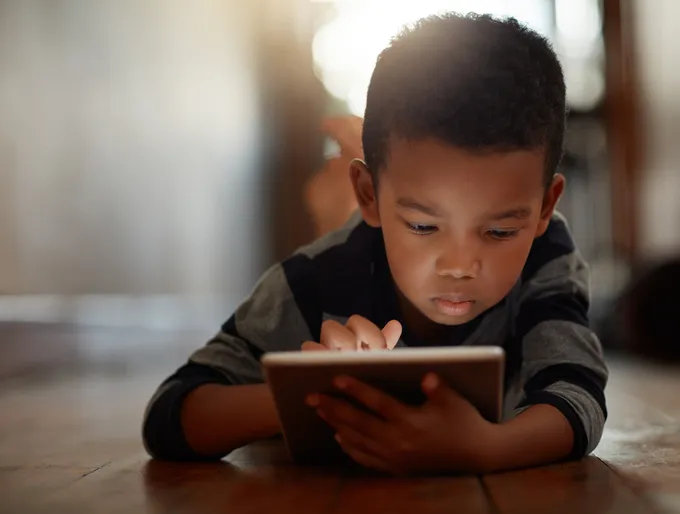
Walk into any screen time conversation with other parents and you'll hear the same question in different forms: Is this show okay for my kid? The truth is, "okay" changes a lot depending on how old your child is. What captivates a toddler can bore a six-year-old, and what's perfectly fine for a second grader might be overwhelming for a preschooler.
Choosing the right content for children isn't really about finding the "best" show or app out there, but matching what your child watches or plays to where they are developmentally. Here's a simple, screen time guidance by age for your kids:
At this stage, screens should play a very small and intentional role, and when they do show up, simplicity wins. Look for content with:
Slow pacing. Fast cuts and constant scene changes can overstimulate a developing brain.
Real-world sounds and voices. Babies are wired to respond to human speech patterns, not just music or effects.
Repetition. Toddlers love (and learn from) seeing the same songs, words, and routines over and over.
If a video or app feels chaotic to you as an adult, it's almost certainly too much for a toddler.
This is the age of big imagination and big questions. Preschoolers are starting to understand cause and effect, basic emotions, and simple stories with a clear beginning, middle, and end. Good educational content for kids at this stage tends to:
Model emotional vocabulary ("I feel frustrated," "I feel proud") rather than just showing action
Encourage participation like singing along, answering questions, predicting what happens next
Introduce early academic skills like letters, numbers, and shapes through play, not drills
Avoid content that relies heavily on irony, sarcasm, or adult humor. Preschoolers take things literally, and jokes meant for grown-ups can go right over their heads or, worse, confuse them.
By now, kids can follow more complex plots, understand cause-and-effect across a whole episode, and start to relate to characters' choices and consequences. This is a great age to introduce intentional screen time with developmentally appropriate content that:
Explores friendship, fairness, and problem-solving through more nuanced storylines
Builds early financial, social, or emotional literacy in age-appropriate ways
Balances entertainment with just enough challenge to keep them engaged without frustration
This is also the age where kids start noticing what their friends are watching, so a bit of guided exploration, such as letting them have some say in what they choose from a curated set of options, helps them build good judgment for later.
Regardless of your child's stage, a few questions can help you evaluate almost anything:
Does it invite interaction, or just consumption? Content that asks kids to respond, sing, guess, or move is doing more for their development than content they simply watch.
Is it ad-free? Younger kids especially can't distinguish ads from content, which makes ad-free environments important well into elementary school.
Does it leave them calmer or more wound up? Pay attention to your child's mood after a session, it tells you a lot about whether the pacing and content were right for them.
There's no single "correct" screen time, there's intentional screen time for where your child is right now. The good news is that as your child grows, your options grow with them, and platforms built specifically around age-based curation - like PlayKids Learning - can take some of the guesswork out of matching content to developmental stages, so you can spend less time evaluating and more time enjoying it together.
For more information about educational content for kids, read other articles:

Your Partner in Parenting, From Baby Name Inspiration to College Planning.
Subscribe