FamilyEducation Editorial Staff

Rachel Griffin Accurso, known to billions of viewers simply as Ms. Rachel, has achieved a level of rockstar status that would make Taylor Swift jealous. Put her on a screen, and a room full of chaotic, screaming toddlers will instantly freeze, completely hypnotized.
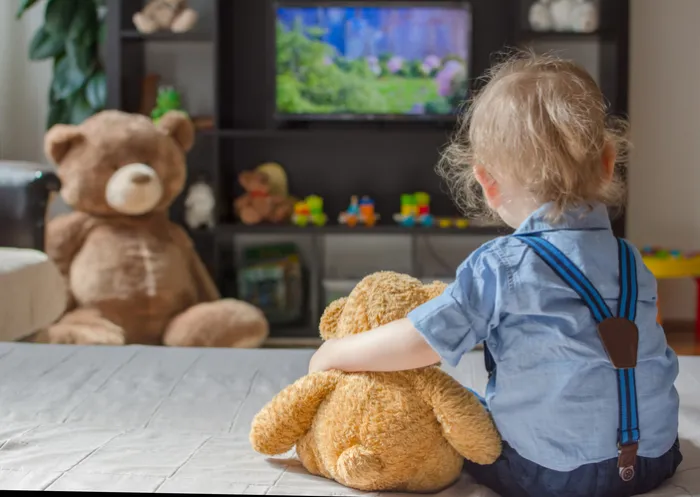
If you have a toddler or a baby under your roof, your home is likely governed by a very specific, pastel-hued dictatorship. The ruler? A woman in a pink headband, denim overalls, and a smile that could disarm a hostile army.
Rachel Griffin Accurso, known to billions of viewers simply as Ms. Rachel, has achieved a level of rockstar status that would make Taylor Swift jealous. Put her on a screen, and a room full of chaotic, screaming toddlers will instantly freeze, completely hypnotized.
But what looks like pure visual wizardry to exhausted parents is actually a masterclass in developmental psychology and speech science. Ms. Rachel isn’t just distracting our kids; she has cracked the biological code of the infant brain. Here is the fascinating, science-backed reason why your baby is totally transfixed by Songs for Littles.
Have you ever found yourself talking to your cat or a newborn in that high-pitched, sing-song voice, only to instantly judge yourself? Don’t. It turns out you were just practicing instinctual speech therapy. In the scientific world, this is called parentese.
Ms. Rachel has turned parentese into a fine art. Crucially, parentese is not baby talk. She isn’t saying nonsense words like goo-goo-ga-ga. Instead, she uses real, grammatically correct words, but stretches out the vowels, elevates her pitch, and moves her face with theatrical joy.
To a baby’s developing brain, regular adult conversation sounds like a fast, muddy blur of noise. Parentese acts like an auditory highlighter. The melodic rise and fall of her voice helps tiny brains separate individual words, mapping out language in real-time. To us, it sounds repetitive; to a baby, it’s the most captivating song they’ve ever heard.
Watch a standard modern children's cartoon, and it feels like a fever dream: rapid-fire camera cuts, exploding colors, and characters shouting over loud electronic music.
Ms. Rachel does the exact opposite. She keeps the background plain and her camera perfectly still. But her real secret weapon is the interactive pause.
She will lean into the camera, ask a direct question - like “Can you say ba-ba?” - and then she stops. She waits, and waits. For a full three to four seconds, she stares out of the screen with an expectant, encouraging smile. For an adult, this silence can feel agonizing. For a baby, it is pure gold.
This pause reduces what psychologists call "cognitive load." It gives a baby’s brain the critical processing time it needs to hear a command, figure out how to move its mouth, and attempt a response. It’s a brilliant illusion that turns passive television watching into an active, two-way conversation.
To truly understand why Ms. Rachel is a soothing balm for babies, it helps to look at the shows that induce total toddler meltdowns. Many popular children's programs use "fast-flicker" editing, changing camera angles every one to two seconds. This floods a child’s brain with dopamine, keeping them visually trapped but mentally overwhelmed. When the TV turns off, a sensory crash, and a massive tantrum often follows.
Ms. Rachel’s videos are an exercise in visual minimalism. Because there are no flashing neon lights or chaotic background characters, a baby doesn't have to fight to filter out distractions. They can dedicate 100% of their energy to her face and her words. It creates a state of calm focus rather than hyper-arousal.
When Ms. Rachel says a word like “P-p-p-pop!”, she doesn’t just say it; she brings her mouth right up to the camera lens.
Babies possess a fascinating network of brain cells called mirror neurons. These cells fire both when a baby does something and when they watch someone else do that same thing. Long before they can talk, babies are lip-readers. They are obsessively studying the mechanics of how human lips, teeth, and tongue placement create sound.
Animated cartoon characters don't have realistic facial muscles. Ms. Rachel gives them a real, living blueprint. By over-enunciating and filling the screen with her mouth, she triggers those mirror neurons, practically begging the baby’s brain to mimic her movements.
Ms. Rachel doesn’t just talk with her voice, she talks with her entire body. Every word is paired with standard baby sign language, pointing, clapping, or nodding.
If she says the word "big," her arms fly up into the air. If she sings about putting something "in," she aggressively mimics the motion. This multi-sensory approach is a massive help for babies. Often, a toddler understands a concept long before their vocal cords have the coordination to speak it. By teaching them gestures and signs alongside words, she gives them an emotional pressure valve to communicate before they can talk, drastically cutting down on toddler frustration.
Perhaps the most genius part of the whole Ms. Rachel phenomenon is that her true target audience might actually be the adults.
Ms. Rachel didn’t stumble into this. She holds a master’s degree in music education and pursued a second master's in early childhood education. She originally started the channel because her own son had a speech delay, and she realized how few accessible resources there were for parents.
Because of that lived experience, her videos double as a covert parenting masterclass. While your baby is staring at her overalls, you are subconsciously learning how to talk to your child. She models positive reinforcement, revives classic nursery rhymes we’ve forgotten, and shows us how to narrate our mundane daily chores (“Open the fridge! Take out the milk!”) to turn our homes into a rich laboratory for language.

Your Partner in Parenting, From Baby Name Inspiration to College Planning.
Subscribe