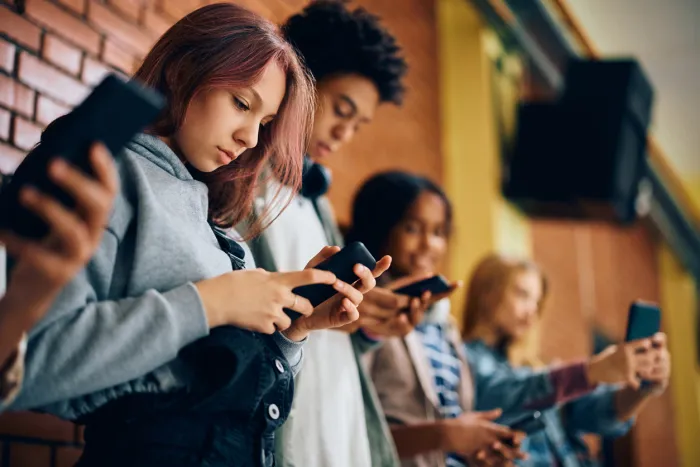
Social media connects teens like never before, but is the cost worth it? The negative effects of social media for teens goes far beyond issues with prolonged screen time. Research shows that constant scrolling, comparison, and online pressure can increase anxiety, depression, and poor sleep quality.
Whilst popular platforms like Instagram, TikTok, and Snapchat help young people express themselves and socialise, experts warn that overuse can harm emotional development and self-esteem. Understanding these risks can help you guide your child toward healthier online habits. Here’s what the latest studies reveal, and what you can do to help your teen find balance in this hyper-connected digital age.
Why Is Social Media Bad for Teens?
Social media was originally designed to connect people and there are some benefits, but for many teens, social media platforms can also create feelings of isolation, inadequacy, and stress. According to the U.S. Surgeon General, up to 95% of teens ages 13–17 use social media, and one-third say they use it “almost constantly” (U.S. Department of Health and Human Services [HHS], 2023). The very features that make social media engaging; likes, comments, and endless scrolling, also have the potential to make them addictive. This isn’t surprising: as a commercial application, social media companies benefit from their users spending more and more time on their platforms.
Adolescence is a critical time for brain development, particularly in areas of the brain that control impulse, emotion, and decision-making. Dopamine-driven “reward loops” encourage social media users to seek validation through notifications and social feedback (Yale Medicine, 2025). This constant need for approval can lead to compulsive checking, anxiety when offline, and heightened emotional sensitivity.
Some experts state that it’s not social media itself that’s harmful: but how, when, and why it’s used. When use becomes excessive or emotionally driven, negative outcomes are far more likely (American Psychological Association [APA], 2023).
Teenage Social Media Addiction
For some teens, social media becomes more than a hobby, it can be a compulsion. Teenage social media addiction can look like anxiety when disconnected, neglecting responsibilities, or feeling irritable without access to devices. Many medical professionals agree that excessive screen time triggers similar brain patterns to substance addictions, especially in the dopamine and reward centers.
Signs your teen may be developing unhealthy habits include:
- Checking apps multiple times per hour
- Losing track of time online
- Feeling anxious or down when offline
- Comparing themselves constantly to others
It can be helpful to set healthy boundaries such as device-free meal-times and family-time, screen-time limits, and social media “detox” days. Encouraging offline hobbies such as art, music, or sports, can help your teen rediscover fulfillment outside of their screens.
How Does Social Media Affect Teens?
Social media can affect teens in nearly every aspect of life; from sleep to school to self-worth and body-image. Studies have linked heavy use with increased rates of anxiety, depression, loneliness, and poor academic performance.Teens who spend more than three hours per day on social media face double the risk of mental health issues, according to the Surgeon General’s advisory (HHS, 2023).
Physically, nighttime screen use disrupts melatonin production, leading to poor sleep quality. Emotionally, teens report that they often face pressure to appear “perfect,” which can create feelings of inadequacy and self-criticism. Socially, overuse of digital communication can weaken face-to-face relationships, leading to isolation even among peers too.
10 Negative Effects of Social Media
While social platforms have benefits, the risks are tangible. Below are ten of the most common negative effects of social media for teens, each supported by research and expert insight.
1. Increased Anxiety and Depression
Studies consistently show a strong link between frequent social media use with higher rates of anxiety and depression. Teens may internalize unrealistic comparisons, experience cyberbullying, or struggle with fear of missing out (FOMO).
2. Sleep Problems
Scrolling before bed exposes the brain to blue light, which disrupts natural sleep rhythms. Poor sleep contributes to fatigue, irritability, and reduced concentration during school.
3. Body Image Issues
Exposure to idealized images on platforms like Instagram can distort body perception. Teens who engage in frequent appearance-based comparison report higher dissatisfaction and reports suggest that they are statistically more likely to develop eating disorders
4. Cyberbullying and Online Harassment
According to Pew Research Center (2025), nearly 59% of teens have been bullied or harassed online. Negative interactions can leave lasting emotional scars and increase the risk of depression and anxiety.
5. Fear of Missing Out (FOMO)
Constantly seeing friends’ activities can make teens feel excluded or inadequate. This fear of missing out fuels compulsive checking behaviors and can reduce satisfaction with real-life experiences.
6. Reduced Attention Span
Social media encourages quick, fragmented thinking. Over time, this can make sustained focus on tasks such as homework more difficult. Multitasking between apps and assignments leads to decreased productivity and learning retention.
7. Lower Self-Esteem
Validation through likes and comments can make self-worth dependent on online feedback. Young people who don’t receive expected engagement may interpret it as personal rejection (Yale Medicine, 2025).
8. Social Isolation
Despite being constantly “connected,” many teens feel lonelier than ever. Overreliance on virtual interaction can replace face-to-face connection, reducing emotional intimacy and even empathy.
9. Privacy and Safety Risks
Sharing personal information can expose teens to identity theft, scams, or predatory behavior. Experts urge parents to teach their young people about online safety, privacy settings and the importance of protecting personal data online.
10. Unrealistic Expectations
Curated, filtered posts can make others’ lives seem flawless. Some teenagers find that they develop unrealistic expectations for their own appearance or success, contributing to chronic dissatisfaction.
Positive and Negative Effects of Social Media
Despite the many negative effects on teens, social media isn’t all bad. It can foster creativity, self-expression, and social awareness. Some young people use it to organize causes, share creations, and stay connected with distant friends. The key lies in balance and intentional use.
Some professionals consider that moderate, mindful engagement, specifically when it is focused on learning, hobbies, or community involvement, can have positive effects. You should help your teen recognize which online interactions energize them and which drain them.
How Does Social Media Affect Teenagers’ Mental Health?
The relationship between social media and teen mental health is complex. While correlation doesn’t always mean causation, studies suggest a pattern: heavy use increases risk for poor mental health outcomes.
Experts believe that social comparison, exposure to unrealistic beauty standards, and constant stimulation all contribute to emotional strain. Teens may also encounter harmful content, including misinformation, self-harm imagery, or negative peer pressure. Over time, these factors can erode resilience and amplify existing mental health challenges.
Negative Effects of Social Media on Society
Beyond individual mental health, social media has reshaped how young people engage with the world. Misinformation spreads quickly, shaping opinions and fueling polarization. Constant connectivity can blur boundaries between online and offline life, influencing everything from friendships to politics. Experts warn that society’s growing dependence on digital validation may reduce empathy and tolerance, especially amongst the younger generation.
Negative Effects of Social Media on Students
For students, excessive social media use can directly impact academic performance. The temptation to multitask like checking notifications while studying, reduces retention and comprehension. Additionally, comparison culture can extend into academic achievement, where students feel pressure to match others’ accomplishments. Often this becomes a cycle that could contribute to frustration, lower motivation and even burn out.
Encouraging “focus time” for study without devices and establishing tech-free zones during homework can help your teenager rebuild concentration skills and self-discipline. Mindfulness practices and reducing screen-time may also help.
What Parents Can Do
Parents play a critical role in helping teens navigate the digital landscape. Here are our top evidence-based strategies from the experts:
- Talk Openly About Social Media – Ask what platforms your teen uses and how they feel while using them. Create a safe space for honest discussion.
- Set Time Limits – Encourage breaks after every 30–60 minutes of use. Apps and devices often include screen-time controls.
- Model Healthy Behavior – Teens learn by example. It is important to avoid scrolling during family meals or conversations.
- Encourage Real-Life Connections – Support in-person friendships, hobbies, and sports to counterbalance online engagement.
- Promote Positive Content – Help your young person curate their feeds with educational, creative, or uplifting content.
- Protect Privacy – Teach your teenager about privacy settings, avoiding oversharing, and recognizing online scams and/or grooming.
- Watch for Warning Signs – Withdrawal, irritability, and academic decline may signal unhealthy use or underlying depression.
- Seek Professional Support – If social media seems to worsen your child’s anxiety or self-esteem, consider consulting a mental health professional.
You don’t have to eliminate your teen’s social media usage completely. The goal is to help teens use it in a purpose-driven and self-aware manner, understanding that likes and followers don’t define their worth.
FAQs
Why does social media negatively impact so many teenagers?
Because it exposes teens to constant comparison, cyberbullying, and overstimulation, which potentially increase anxiety and depression.
Why is social media bad for us?
Overuse affects sleep, mood, and relationships. It can reduce attention span and promote dependency on external validation.
What are the top three dangers of social media?
Cyberbullying, mental health decline, and exposure to harmful or misleading content (Pew Research Center, 2025).
Why shouldn’t social media define your teen?
Because your young person’s identity isn’t created by algorithms, or engagements on social media platforms. External validation from these platforms or the external profile they put online isn’t who they are and doesn’t define them. Your teen’s identity is shaped by who they are, their preferences and beliefs, values, real-life experiences and relationships. Not by likes, filters, or follower counts.
Check Out These Related Topics:
- My child wants to be a YouTuber- is it safe?
- Should my teen be on Discord?
- How to communicate effectively with your teenager
- Dangerous social media trends among teens