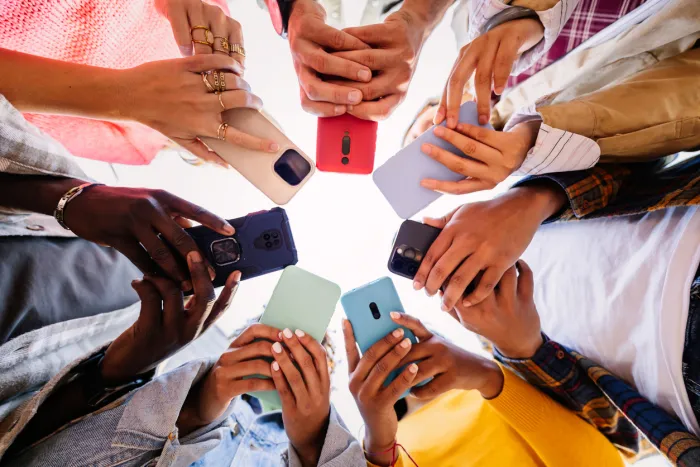
While risks exist, especially with excessive screen time or negative content, experts say positive engagement matters most. With guidance from parents, social media can support teens’ emotional well-being, learning, and identity development. The goal isn’t to avoid social media altogether, but to help teens use it thoughtfully and safely.
Benefits of Social Media for Teens
Social media often gets a bad reputation, especially when it comes to teens. We are bombarded with media that highlight its risks including cyberbullying, screen addiction, and social comparison. But used wisely, social media can also offer real benefits. It can help young people stay connected, explore their identities, and access a wide range of information and support that has the potential to enrich their lives. Understanding the benefits of social media for teens can help parents better understand their teenager’s digital world and perspective as well as guide their children toward healthy, balanced online habits.
Why Is Social Media Good for Teens?
Social media platforms have become a major part of teenage life in the United States. According to Pew Research Center (2023), 95% of teens report using YouTube, and over two-thirds use platforms like TikTok, Snapchat, and Instagram daily. For most, these are not just entertainment spaces, they’re vital parts of their social worlds.
Social media allows teens to stay connected with friends and family, even across long distances. It lets them share milestones, celebrate achievements, and maintain relationships that might otherwise fade. For young people with limited local social opportunities especially for those in rural areas, new schools, or living with chronic illness, social networks offer a lifeline for connection and belonging.
Experts say that when used positively, social media offers unique opportunities for creative self-expression, learning, and community building (American Psychological Association, 2023). Teens can use it to explore interests, learn new skills, and develop digital literacy that will serve them in school, work, and life.
Benefits of Social Media for Teenagers
1. Strengthening Social and Emotional Development
Adolescence is a time when social interaction plays a central role in personal growth. Social media helps teens develop empathy, communication skills, and a stronger sense of self. By engaging with peers online, they practice expressing opinions, offering support, and understanding diverse perspectives.
Some experts argue that positive online interactions can boost confidence and self-esteem, especially when teens receive encouraging feedback from friends and mentors. It’s also a valuable tool for maintaining emotional connections with extended family members or peers who’ve moved away.
2. Building a Sense of Belonging
Social media can help teens feel part of something bigger than themselves. Whether it’s a fandom, an environmental group, or a shared identity community, being part of an online network can reduce loneliness and isolation. This was particularly true during the COVID-19 pandemic, when platforms allowed teens to stay connected despite physical distancing.
For teens from marginalized groups, such as LGBTQ+ youth, or with neurodivergence like Autism, online spaces often provide vital acceptance and support. Studies show that such communities can significantly improve mental health outcomes by offering understanding, validation, and friendship (APA, 2023).
3. Access to Health Information and Resources
Today’s teens are proactive about seeking answers. Many use social media to find reliable health information, from mental-health awareness to reproductive health education. Public health organizations, hospitals, and verified professionals use social media to share science-based information in ways that are accessible and engaging for young audiences.
According to the National Institutes of Health (NIH, 2023), teens who engage with credible health content online report better awareness of mental-health resources and are more likely to seek professional help when needed. Social platforms have also become spaces for mental-health advocacy, breaking stigma and promoting open dialogue around anxiety, depression, and self-care.
4. Encouraging Creativity and Self-Expression
From photography and writing to music, art, and video creation, social media gives teens a platform to explore their creativity. Apps like TikTok, YouTube, and Instagram allow them to experiment with storytelling, editing, and visual design, all skills relevant to modern education and future careers.
Expressing themselves publicly helps many teens gain confidence, explore identity, and find purpose. Some experts say that creative online engagement can boost mood and self-esteem, especially when teens receive positive reinforcement from peers.
5. Expanding Learning Opportunities
Beyond socialization, social media exposes teens to educational content and global perspectives. From history explainers on YouTube to science podcasts and college prep accounts on Instagram, the internet is a vast classroom. Many teachers even use social networks to extend learning beyond the classroom, encouraging discussion, collaboration, and peer learning.
The American Psychological Association emphasizes that these educational benefits depend on active, mindful engagement, encouraging critical thinking and responsible information sharing (APA, 2023). Parents can help by discussing which accounts provide credible, accurate content.
How Does Social Media Affect Teenagers’ Mental Health?
Social media’s impact on teen mental health depends on how it’s used. While heavy, unregulated screen time can contribute to stress or poor sleep, moderate, positive engagement can actually support emotional well-being.
Benefits of social media for teens’ mental health include:
- Finding peer support and shared experiences that normalize emotions
- Accessing mental-health education and crisis resources
- Reducing stigma through open discussion about anxiety, depression, and recovery
- Experiencing a sense of purpose through helping or inspiring others online
The U.S. Surgeon General’s Advisory on Social Media and Youth Mental Health (2023) acknowledges these potential positives, noting that social platforms can help young people “build community and foster identity.” However, it also cautions that risks increase with excessive use and exposure to harmful content.
To help teens navigate this balance, parents should encourage open conversations and model mindful social-media behavior. Learn more about the negative effects of social media for teens and how to reduce potential risks.
10 Positive Effects of Social Media
While every teen’s experience is different, research highlights several consistent benefits of social media use when approached with guidance and balance.
- Staying Connected With Friends and Family - Teens use messaging, photos, and video chats to maintain relationships, even across states or countries.
- Building Support Networks - Online communities can offer emotional support, especially for teens coping with challenges like grief, illness, or discrimination.
- Finding Shared Interests - Whether it’s gaming, fashion, or science, social media allows young people to connect over hobbies and passions.
- Encouraging Creativity - Platforms provide digital tools for art, music, and design: helping teens explore self-expression and creative careers.
- Accessing Educational Resources - From coding tutorials to study tips, social media can supplement school learning and spark curiosity.
- Promoting Activism and Awareness - Teens can learn civic engagement by advocating for causes they care about, developing empathy and leadership.
- Improving Digital Literacy - By navigating online spaces, teens develop skills in communication, critical thinking, and information evaluation.
- Breaking Mental-Health Stigma - Sharing experiences and seeing others talk about their struggles helps normalize seeking help and support.
- Enhancing Global Awareness - Teens gain exposure to cultures, ideas, and current events from around the world, broadening their perspectives.
- Exploring Identity Safely - Online environments let teens explore aspects of identity like interests, values, beliefs, before expressing them offline.
These positive effects of social media show that with proper boundaries, it can play a healthy role in adolescent development.
Pros and Cons of Social Media for Teens
|
Pros
|
|
Most experts agree the goal isn’t to eliminate social media use but to help teens use it mindfully. Encourage them to pay attention to how it makes them feel and take breaks when needed. Parents can set clear boundaries around screen time while remaining approachable and supportive.
Tips for Parents: Helping Teens Get the Best Out of Social Media
- Talk Openly About Online Life - Ask your teen about their favorite apps, accounts, and creators. Show curiosity, not judgment. This builds trust and helps you guide them effectively.
- Encourage Balance - Set reasonable limits on screen time, ensuring enough time for sleep, exercise, and in-person interaction. Encourage “screen-free” hours before bed.
- Model Healthy Use - Teens often mirror adult behavior. Demonstrate positive online habits, like fact-checking sources and taking breaks.
- Promote Critical Thinking - Discuss how to recognize misinformation, filter ads, and question viral trends. Empower your teen to think before sharing personal information.
- Follow Their Lead (Respectfully) - If invited, follow your teen’s social-media accounts, but avoid commenting on every post. Maintain trust and privacy.
- Encourage Positive Communities - Help your teen find groups that celebrate kindness, creativity, and inclusion. Remind them that unfollowing toxic content is healthy self-care.
- Check In Regularly - Make conversations about social media routine, not reactive. A simple “How’s your feed making you feel lately?” can go a long way.
Your Decision In Partnership
Social media is here to stay, and for today’s teens, it’s a major part of social and emotional life. When guided wisely, it can help them stay connected, informed, and creative. Parents play a key role in shaping how teens experience these platforms: teaching balance, awareness, and kindness online.
By focusing on the benefits of social media for teens, families can embrace technology as a tool for growth, connection, and understanding. The key is not fear, but partnership: helping teens use social media in ways that enrich their real-world lives.
FAQs
What Are the Positive Effects of Social Media for Teens?
Social media can strengthen friendships, boost self-expression, and give teens access to educational and mental-health resources.
What Are the Positives of Social Media?
It offers connection, creativity, learning, and a sense of belonging when used responsibly.
Why Is Social Media Good for Kids Under 14?
With supervision, it helps children learn online responsibility, communication, and creativity in safe environments.
What Are the Main Reasons Teenagers Use Social Media?
To stay connected with friends, explore interests, express identity, and keep up with news and trends.
You May Also Like These Popular Articles:
A parent’s guide to supporting teens with responsible AI use